
N.B. The statistics are from several sources, especially the book “Blitz” by Dr. Corinna Peniston-Bird. The memories are mine…. or sometimes learned from my parents.
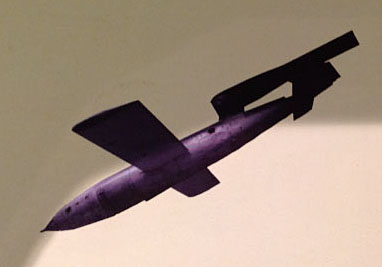
It was a beautiful sunny morning on June 21, 1944, when my father and I went into the back garden for our morning exercises. This was 76 years ago, and I was nearly 6¾ years old! That day is etched in my memory forever. In the middle of our work-out, we heard the drone of a plane. “I don’t recognize it”, I said. “I think it is a Halifax bomber”, my father said. The buzzing noise increased and then we saw it. Suddenly, we caught a glimpse of a plane with flames coming out of its tail, as it zoomed over the tops of our pear trees. “It’s a buzz bomb!” shouted my dad, as he grabbed my shoulder, to pull me down beside him on the lawn. There was an incredible explosion and tiles showered from the roof. Only one tile hit my father on his backside. I was luckier.
We picked ourselves up and ran into the kitchen, where my grandmother was standing in a pile of broken plates, holding a teacup. “It wasn’t my fault – I don’t know what happened”, she said. “Don’t worry dear”, my father said, “it was a bomb, not you!” We ran into the front hall and discovered that the entire façade of the house was in ruins. Our thick oak door had been blown halfway up the stairs by the blast. We climbed over it and my father was in a panic, as their bedroom was in the front of the house and the air upstairs was thick with plaster dust.
We rushed down the corridor into the bedroom, where the windows (which were crossed with sticky tape, to reduce the glass splinters) and window frames had been blown in all over the bed. “Jeanne, Jeanne, where are you?” my father shouted. “I’m under all this bloody mess!” she replied. Luckily, my mother liked thick velvet curtains, which had blown across the bed and helped prevent the flying glass and debris from hurting her and my little brother, Richard, who was born on 1st June, 1944, just three weeks earlier. We almost laughed when we saw that he had slept through it all.
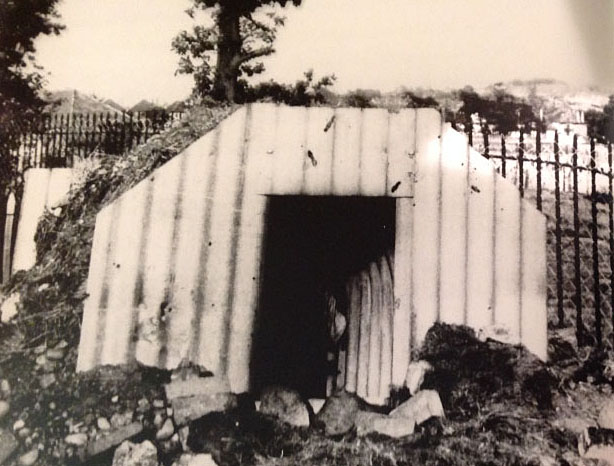
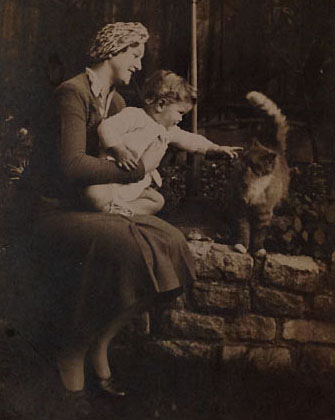
At the beginning of the war, in 1939, my dad had arranged for a concrete dugout shelter to be built in our back garden, as recommended by the government. The machine dug down three or four feet and the contractor built a solid concrete shelter, with space for two double camp beds and a roof made of curved sheets of corrugated iron, topped by several feet of earth and rocks, so it looked like an ugly rockery. It was not a pleasant place to spend the night. Some little furry creatures also liked the protection of the shelter and we did not have a proper drain, so it filled with water after the frequent London showers. I remember commiserating with our poor cat, Twinkle, very wet and woebegone, after having to swim to the doorway.
When the air raid alarm sounded the ‘alert’, the ululating wail woke us all up. As a little boy, grumpy in the middle of the night, I was told that this was the noise made by train drivers, who had broken down and needed help. My parents never forgot me saying: “Why doesn’t the bothering engine driver bring his screwdriver with him?” It was a cold, rainy night and I was being hustled to the dug-out, with a raincoat over my pajamas. It was difficult to sleep in that damp dungeon. We then had to wait, often for many hours, for the two-minute blast of the all-clear siren. Only then could we resume our normal activities.
World War II lasted from 1939 until 1945. ‘The Blitz’ was at its worst from 1940 onwards. The word ‘Blitz’ was a British abbreviation for the contemporary German word ‘Blitzkrieg’, which means ‘lightning war’. We were all issued with gas masks, because of the terrible effects of the mustard gas used in the First World War. Fortunately, we never needed them, although we children loved to play with them. We also kept buckets of sand and buckets of water handy, in case there was a fire, caused by enemy bombing. One Londoner in 180 died in air raids, 222,000 homes were destroyed and five million were damaged. All over London and many other British cities, huge barrage balloons (called ‘blimps’, nowadays) were attached to long steel wires, which made it difficult for enemy bombers to fly low over the city. I quite missed them when the war was over!
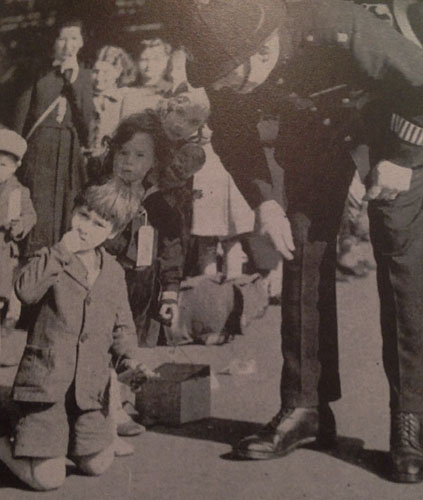
At the beginning of the Blitz, one and a half million mothers and children were evacuated from London alone. My parents decided that we should get out of town, so we moved to Berkhamsted, in Hertfordshire, where we shared a large house with another family. It was not easy. There was only one kitchen and one airing cupboard, so there were regular disagreements about crockery and bedclothes! One foggy spring morning, I was sitting on my tricycle in the driveway, when I saw my father return to the house, completely soaked and shaking water from his bowler hat. To reach the station, he usually took a short cut across the lock gates, but that day the lock keeper did not see him in the fog and opened the gates. My dad was thrown into the water. After explaining the incident to my sympathetic mother, he said: “That’s it! I have had enough of living out here. I’d rather go home to London and face a Jerry bomb than stay in this God-forsaken place!” So, we moved back to London. Twinkle was delighted to return home!
Hitler’s German empire was beginning to shrink in 1944, but he had two new deadly weapons: the V1 and V2 rockets (the ‘V’ represents the German word for ‘Revenge’). We called the V1s ‘Buzz Bombs’, because of the buzzing sound of the planes’ rocket motors. The German Luftwaffe (air force) had suffered such severe losses in their bombing raids on Britain that these pilotless rockets became the new Nazi deadly weapons. Never short of nicknames, the British also nicknamed the V1s ‘Doodlebugs’ and ‘Bob Hopes’ – ‘Bob down and Hope for the best!’
The V1 raids only commenced on June 13, 1944, a week after D-Day, so we were among the first recipients. The rockets were sent from Nazi bases in Northern France, which were overrun in late August that year, but buzz bombs could also be fired from the air, so the raids continued. They came down when their rocket fuel ran out, so people on the ground dreaded that sudden absence of sound, but it did give time for people to run to the nearest air raid shelter. The later V2s were slim rockets, with a longer range. They travelled at 3,500 mph, climbed to over 300,000 feet and landed almost vertically on the unsuspecting victims.
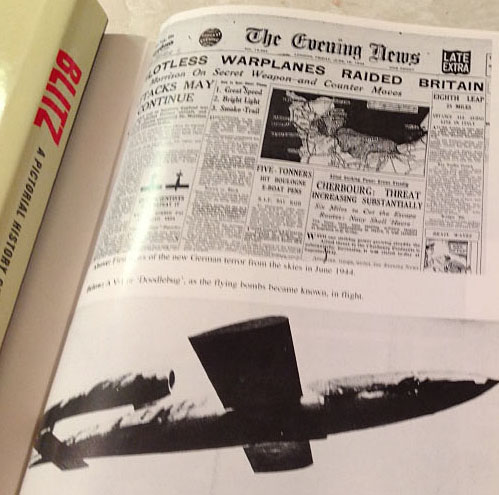
As a small boy, I was fascinated by aeroplanes. The government supplied card games with the silhouettes of German and British planes, to help us identify the different aircraft, playing ‘Snap’. As a smart-aleck kid, I usually won! We lived in Finchley, north-west of London, so the German bombers often flew over our suburb on the way to bomb Central London and I got to know the sounds of the different planes, like many other children. We were fascinated by planes, without realizing the danger. The elderly local air-raid warden, Mr. Wootton, used to come across the road to ‘borrow’ me to go out on the village green, when he learned that a raid was imminent, so that I could help identify the incoming planes – he even had a black tin helmet for me to wear! I was a precocious ‘plane-spotter’ and would tell him that the first 40 planes were Dornier 17Zs etc. and he would scribble it all down. When the planes had flown over, he limped back to his house as fast as possible, to call the Air Ministry, with all the details. I just ran home. Fortunately, Finchley was not a target, although we were occasionally bombed. Of course, the buzz bombs were indiscriminate.
My interest in plane-spotting once resulted in a fortuitous accident. I was walking down the road, gazing skyward at a squadron of my beloved British Spitfires, some steps behind my mother, when I walked into a lamp post and knocked myself out! We were just outside a barracks, which had been taken over by American soldiers, who were training in Britain. The sentry at the gate rushed to help and took my mother and me inside the barracks. The army cook put slabs of cold meat on my forehead, to reduce the swelling. The friendly soldiers were delighted to meet us, and they showered me with candies and good wishes. Nearly all the younger men in Britain were at war, so it was a change for me to meet those friendly young soldiers, with their funny accents. Some Britons rather resented the brash American GIs and a British comedian had raised a lot of laughs, when he said: “The Yanks are overpaid, overfed, oversexed – and over here!” But naturally I had a very good first impression of our American allies.
My father had been a Captain at the end of WWI and he was technically still young enough (45) to have enlisted in WWII, but he received an official letter, advising him that his work with radar was too important, so he continued to work with Marconi during the war. Unfortunately, everybody had to take turns at fire-watching. In his case, this involved standing all night on the roof of the Marconi building, beside the Thames. He could see the beams of the searchlights looking for German bombers, as well as the bursts of the anti-aircraft fire, lighting up the night sky. Those cold winter nights did not do his lungs any good and my mother always said that they hastened his death in 1952. Firewatchers were invaluable in providing immediate information for the firemen and ambulances, so that they could rapidly locate bombed buildings, and endeavour to put out the flames and look after the injured.
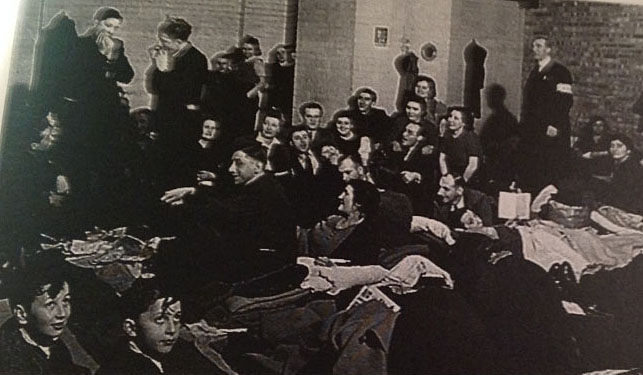
Londoners often had to spend the night in underground train stations, because they were safe shelters from the bombs. My Mother and I once spent the night on the platform at Tottenham Court Road Station. For a little boy, it was a very exciting experience, seeing all these people putting a brave face on the troubles and tragedies of the Blitz. There were Cockney families, dancing and singing traditional songs – although some other people were trying to sleep, including my mum. In 1941, the government built eight 100ft. deep shelters, which could each accommodate 8,000 people, because there was not enough space in the underground stations.
It was also in 1944, in April, that I first saw a plane shot down in flames. The German pilot parachuted down into the greenhouse of a family living about a mile away! My friends and I cycled to the house and saw the angry owner menacing the pilot with a garden fork, while the pilot was trying to detach his parachute. “Look what you’ve done to my tomatoes!” he yelled. Just then, the local policeman turned up on his bicycle. He was a large, elderly man, and he waved his truncheon (night-stick) at the German, saying: “Hands up!” The pilot, probably relieved when he saw nobody had a gun, stuttered: “Zigarette, bitte!” Somebody gave him a cigarette and he relaxed a little. A police car came and drove him away, in handcuffs. This was the first time I had fully realized that there were people in the planes that I loved to watch. This incident made me see things differently. Suddenly, I was more conscious of the risks and dangers involved.
There were other aspects of the war which I still remember. Our food was rationed and we all had ration books, which allowed us to buy two eggs, 10 cubes of sugar and half a pound of butter every month, as well as one loaf per week. There was virtually no chocolate available, so when rationing finally ended in 1952, I was able to buy chocolate without a ration book. A year later, the dentist told me that I had thirteen cavities!
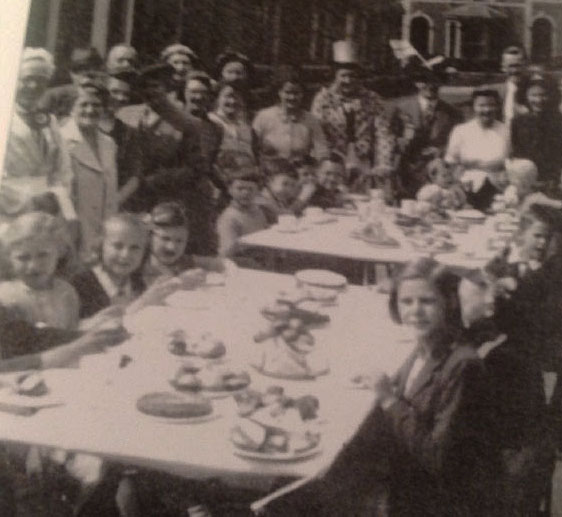
We all had to blacken out our house lights by sticking thick black paper on the windowpanes, so that we did not inadvertently give any help to the bomber pilots overhead. All road signs and signposts were taken down so as to make it as difficult as possible for the enemy, if they landed. There were no streetlights and vehicles had to cover their headlights, with just a pinprick of light showing. No private cars could obtain fuel, so they stayed off the roads. The V1 that landed so close to our house that day unfortunately caused part of the chimney to drop through our garage roof and severely dent the roof of my father’s 1938 Willys station wagon. This made my father particularly angry!
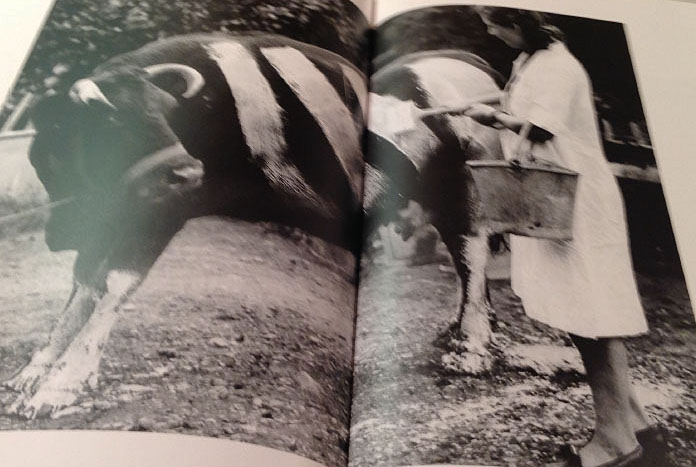
Because of the darkness, there was a serious problem on country roads, where animals sometimes wandered and caused accidents. Farmers were asked to paint three large white stripes on both sides of their cows! This actually worked!
The buzz bomb which damaged our home fortunately landed on an empty house. It was about 100 metres from our home. The only casualty was tragic. A lady was looking in the window of a funeral home, nearly a mile away. The window shattered and she was killed by broken glass. After a bombing, one of the children’s pastimes during the war was collecting shrapnel. Their parents would not have approved, if they knew we children were going to the bomb craters, to pick up the metal shards of the bomb shells, which were extremely popular trophies. A military policeman caught me with my bag full of shrapnel, including part of a shiny blue nose cone, which was immediately confiscated! Metal was very precious during the war and even the railings around government and private buildings were taken away and melted down, to help make British weapons. For many months, the front of our house was covered with a large blue tarpaulin and my parents’ bedroom and the dining room below were closed off. The permanent repairs could only be undertaken after the war, in late 1945. I remember my father looking at the calendar, later on that dreadful day: “Look, it’s June 21, the longest day of the year – and certainly the longest bloody day in my life!” These memories flood back every Poppy Day….
Photos taken from "Bltz" by Corinna Pemiston-Bird and "The Children Front" by Henry Buckton
